

What Are Childhood Sport Games?Childhood is one of the most beautiful stages of life, filled with laughter, friendship and unforgettable Memories of childhood sport games. Before smartphones, online games and social media became part of everyday life, children spent much of their free time playing outdoor and traditional games with friends. These childhood sport games were not just a way to have fun—they helped children become active, confident, creative and socially responsible.
Games such as cricket, football, kabaddi, kho-kho, volleyball, badminton, running races, hide-and-seek, gilli-danda, marbles and many traditional village games created unforgettable memories. More importantly, they taught children valuable lessons about teamwork, discipline, friendship, confidence and sportsmanship that remain useful throughout life.
Childhood sport games are physical, recreational or competitive activities that children play during their early years. They can be played individually, in pairs or as teams.
These games may be organized sports, traditional games or simple playground activities. The main purpose is to encourage children to move, interact with others, develop physic
Childhood games can generally be divided into several categories:
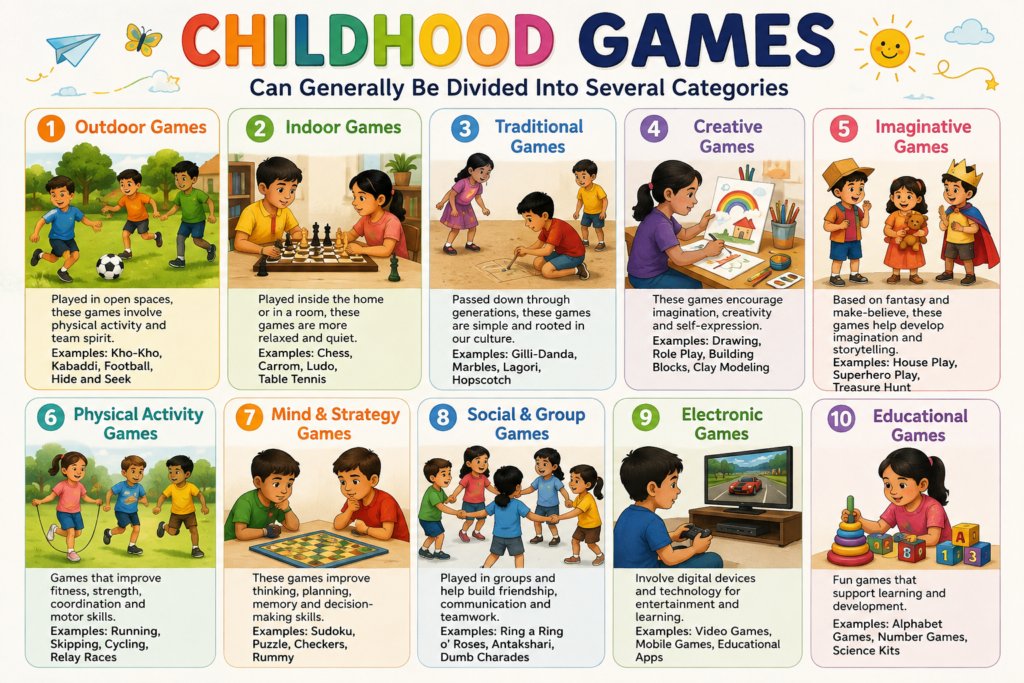
Outdoor Team Games
These games require teamwork, coordination and communication for those unforgettable memories of childhood sport games
Examples:
- Cricket
- Football
- Kabaddi
- Kho-Kho
- Volleyball
- Basketball
- Relay races
Traditional and Local Games
Traditional games are usually connected with local culture and community life.
Examples:
- Gilli-danda
- Lagori
- Marbles
- Kite flying
- Seven stones
- Tug of war
- Traditional running and chasing games
Individual Games
These games allow children to improve their personal skills and compete with themselves or others.
Examples:
- Running
- Cycling
- Swimming
- Skipping
- Long jump
- Badminton
- Athletics
Indoor and Recreational Games
Not every childhood game needs a large playground. Children can also enjoy games indoors or in small spaces.
Examples:
- Carrom
- Chess
- Table tennis
- Ludo
- Board games
- Puzzles
Why Were Childhood Games So Important?
For many people, childhood games were the first introduction to competition, friendship and teamwork.
When children played together, they learned how to follow rules, wait for their turn, accept victory and deal with defeat. A simple game on a playground could teach lessons that children might not learn from a classroom alone.
A child who loses a cricket match learns that losing is not the end. A child playing kabaddi learns the importance of courage and quick decision-making. A child participating in a relay race learns that individual performance matters, but teamwork matters even more.
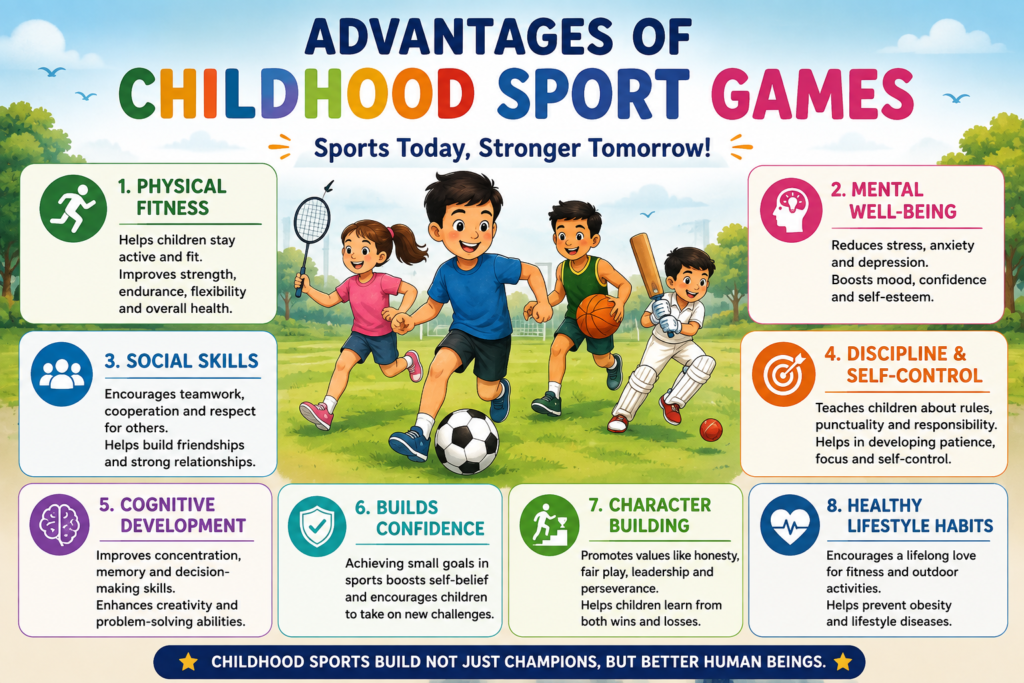
Advantages of Childhood Sport Games
Physical Fitness
Regular physical activity helps children develop stronger muscles and bones, improve coordination and maintain overall fitness. Running, jumping, cycling and playing sports also help children develop better balance and movement skills.
Mental Development
Sports require children to think, react and make decisions. Games such as chess develop strategic thinking, while team sports encourage children to understand situations quickly and respond appropriately.
Teamwork
Team games teach children that success is often achieved together. Players learn to communicate, support one another and work toward a common goal.
Confidence
When children learn a new skill or perform well in a game, they develop confidence. Even overcoming failure can make them mentally stronger.
Social Skills
Playing with other children helps develop communication and friendship. Children learn how to cooperate with people who may have different personalities, abilities and opinions.
Discipline
Sports introduce children to rules, practice and responsibility. They learn that improvement requires regular effort and patience.
Stress Relief
Playing outdoors gives children an opportunity to relax, have fun and take a break from academic pressure and daily routines.
The Spirit We Learn Through Childhood Games
The greatest benefit of childhood games is not always winning. It is the spirit behind the game.
Sportsmanship
Children learn to respect both winners and opponents. They understand that competition should not destroy friendship.
Team Spirit
A team succeeds when its members support each other. This teaches children cooperation and unity.
Never Give Up
Every game has moments of failure. Children learn to try again instead of giving up after one mistake.
Respect
Sports teach children to respect teammates, opponents, coaches, referees and rules.
Leadership
Team games give children opportunities to make decisions, guide others and take responsibility.
Patience
Not every game goes according to plan. Children learn to wait, observe and respond at the right time.
Courage
Games such as kabaddi, football and athletics encourage children to face challenges rather than avoid them.
Childhood Games Then and Now: Memories of Childhood Sport Games
Childhood has changed significantly over the years.
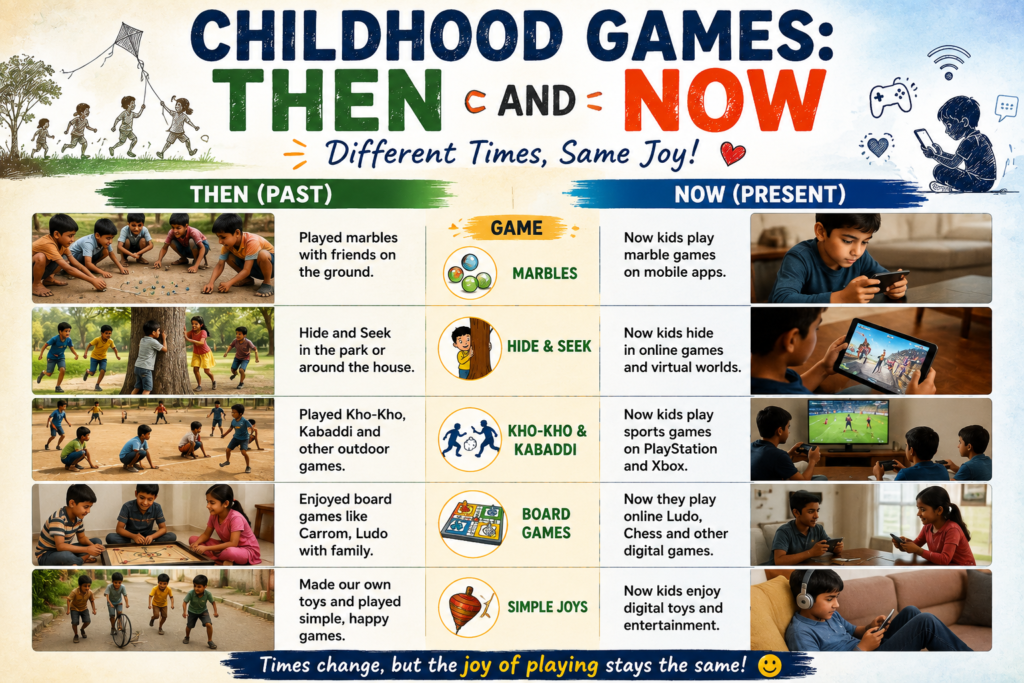
Childhood Games in the Past
Earlier, children generally had more opportunities to play outside with friends and neighbours. A street, school ground, open field or village playground could become a place for an entire day’s adventure.
Children often created their own games using simple materials. They did not always need expensive equipment or sophisticated facilities. Imagination was an important part of play.
A ball, a few stones, sticks, a bicycle or even an empty playground could provide hours of entertainment.
Childhood Games Today
Today, children have access to many more forms of entertainment and organized sports. Smartphones, tablets, computers, gaming consoles and online games have become common.
At the same time, children have opportunities that were less accessible to previous generations, including professional sports academies, indoor sports centres, swimming pools, fitness programs and structured coaching.
The challenge is finding the right balance.
Technology can provide entertainment and learning, but physical activity and real-world interaction are still essential parts of a healthy childhood.
From Street Games to Digital Games
One of the biggest changes is the movement from physical games to digital entertainment.
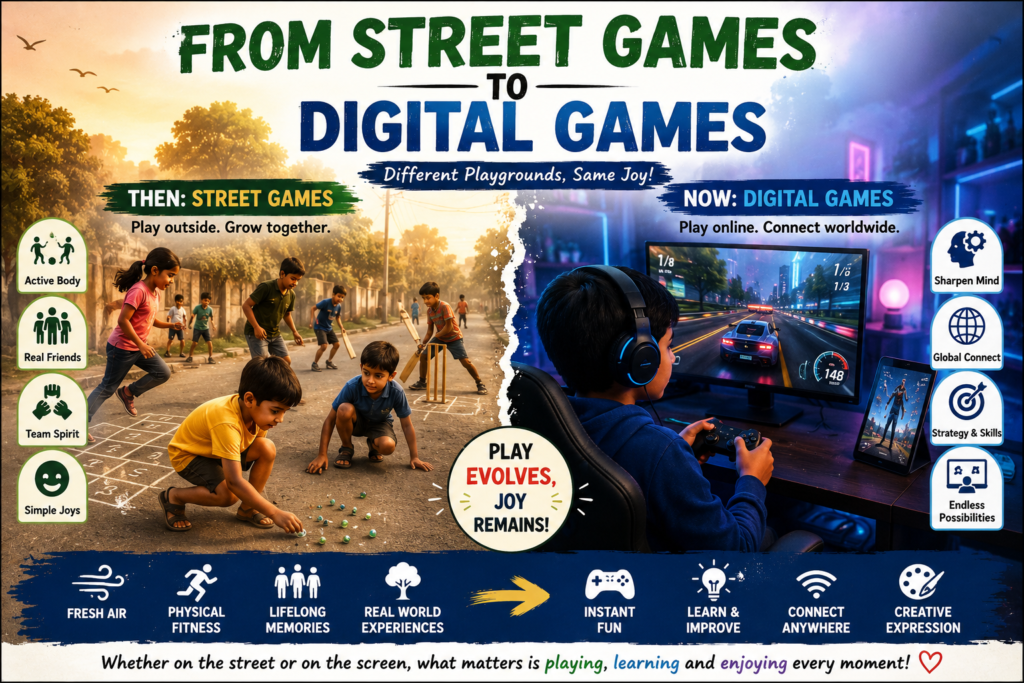
Earlier, children might spend their evening playing cricket in a street or kho-kho on a school ground. Today, some children may spend the same time playing a cricket or football video game on a smartphone or gaming console.
Digital games can develop certain skills such as problem-solving and hand-eye coordination, but they cannot completely replace the physical, social and emotional experiences of outdoor play.
The sound of friends laughing, arguing about the rules, celebrating a winning run or going home tired after several hours of playing created memories that technology cannot easily reproduce.
Why Memories of Childhood Sport Games Inspire Us to Bring Back Outdoor Games?
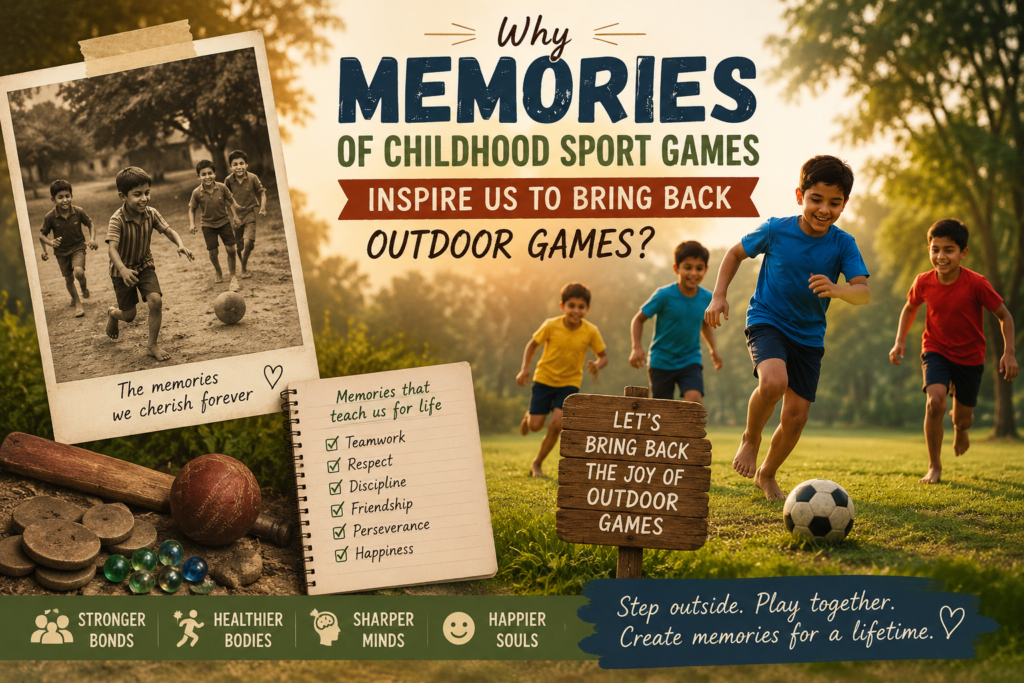
Bringing back outdoor games does not mean rejecting modern technology. Instead, children need a healthy balance between digital entertainment and physical activity.
Parents, schools and communities can encourage children to spend regular time playing sports and traditional games.
Even simple activities such as cycling, running, football, cricket, badminton, kho-kho or skipping can make a meaningful difference.
The goal should not always be to create professional athletes. The goal is to create healthy, confident, disciplined and socially connected individuals.
Memories of Childhood Sport Games and the Lessons They Teach for Life
The lessons learned on the playground often continue into adulthood.
When we learn teamwork as children, it helps us work with colleagues later in life. When we learn discipline through sports, it helps us manage our studies and careers. When we learn how to accept defeat, we become better prepared to handle life’s challenges.
In this way, childhood games are much more than games. They are a small training ground for life.
Memories of Childhood Sport Games and the final Conclusion
Childhood sport games are among the most valuable experiences of growing up. They provide physical exercise, friendship, happiness and unforgettable memories while teaching important values such as teamwork, discipline, confidence, respect, leadership and sportsmanship.
The games children played years ago may be different from the games children play today, but the fundamental purpose remains the same: to play, learn, grow and enjoy childhood.
Modern technology has changed the way children spend their free time, but outdoor and traditional games should not disappear. A balanced childhood should include both modern opportunities and the simple joy of playing with friends.
After all, years later, we may forget who won a particular childhood match—but we rarely forget the friends we played with, the laughter we shared and the memories we created.This version is suitable for a general website blog and can also be adapted into an SEO-focused article with a title tag, meta description, keywords, FAQs, and headings if you want to target Google search traffic.